The year's winners paid for Thursday's selling while credit barely moved
Published Nov 5, 2026, 2:03 PM PT. Figures and prices are as of that date; the current record is at /results.

Prices as of 2:00 PM Pacific, using Thursday's regular-session close. Board figures are our last read before the close.
The S&P 500 fund closed −4.38% and the chip fund −11.57%, and most people will read Thursday as the midterm result breaking the AI trade. Our board says the selling went wider and more specific than that: the fifth of stocks that had gained the most this year fell nearly twice as far as the rest, in health care as well as in technology, while high-yield credit closed −0.28%. We think positions were cut harder than views changed, and SMH at 445.91 sits well under the 518.25 line in our Friday call. The book took repeated small losses on dips it should have left alone and finished nearly all in cash.
The tape
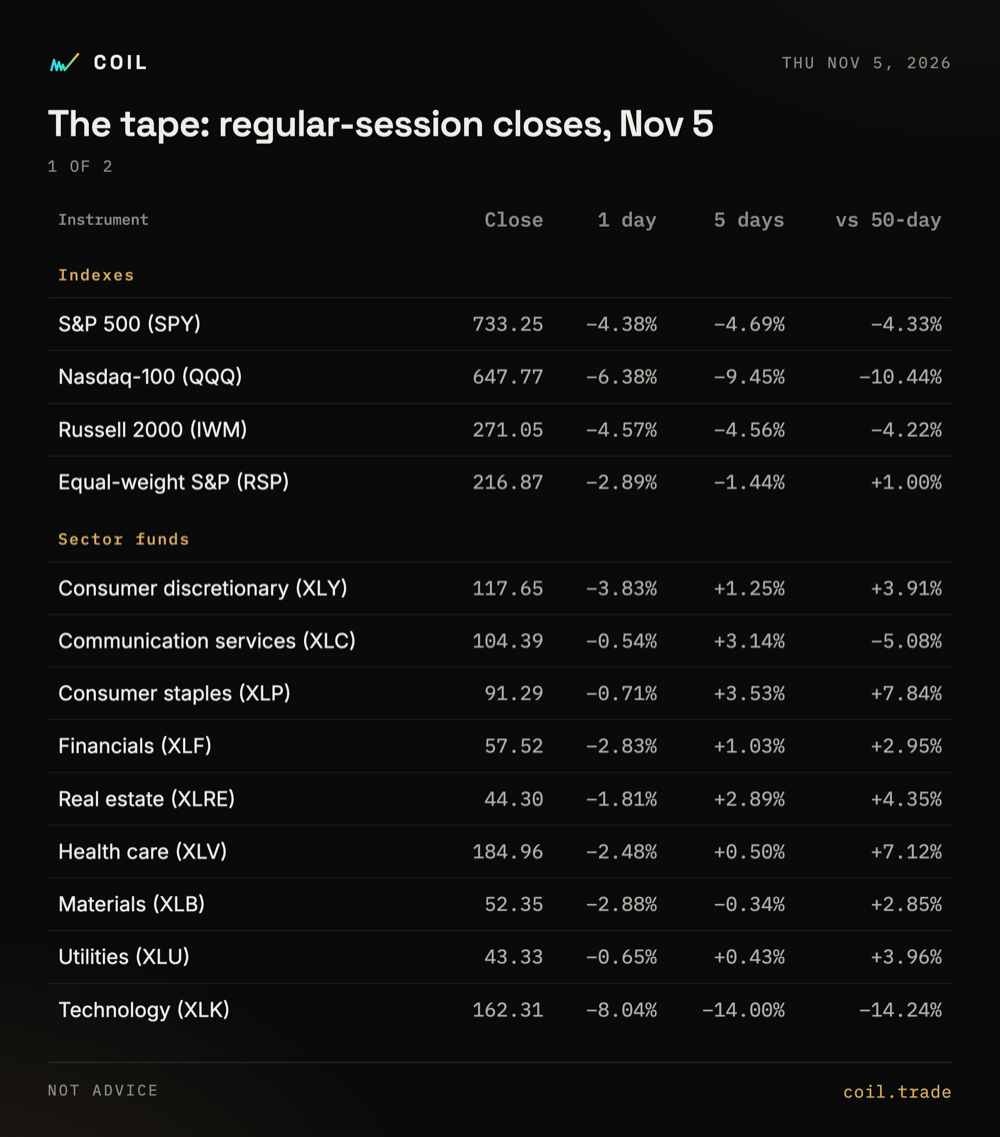
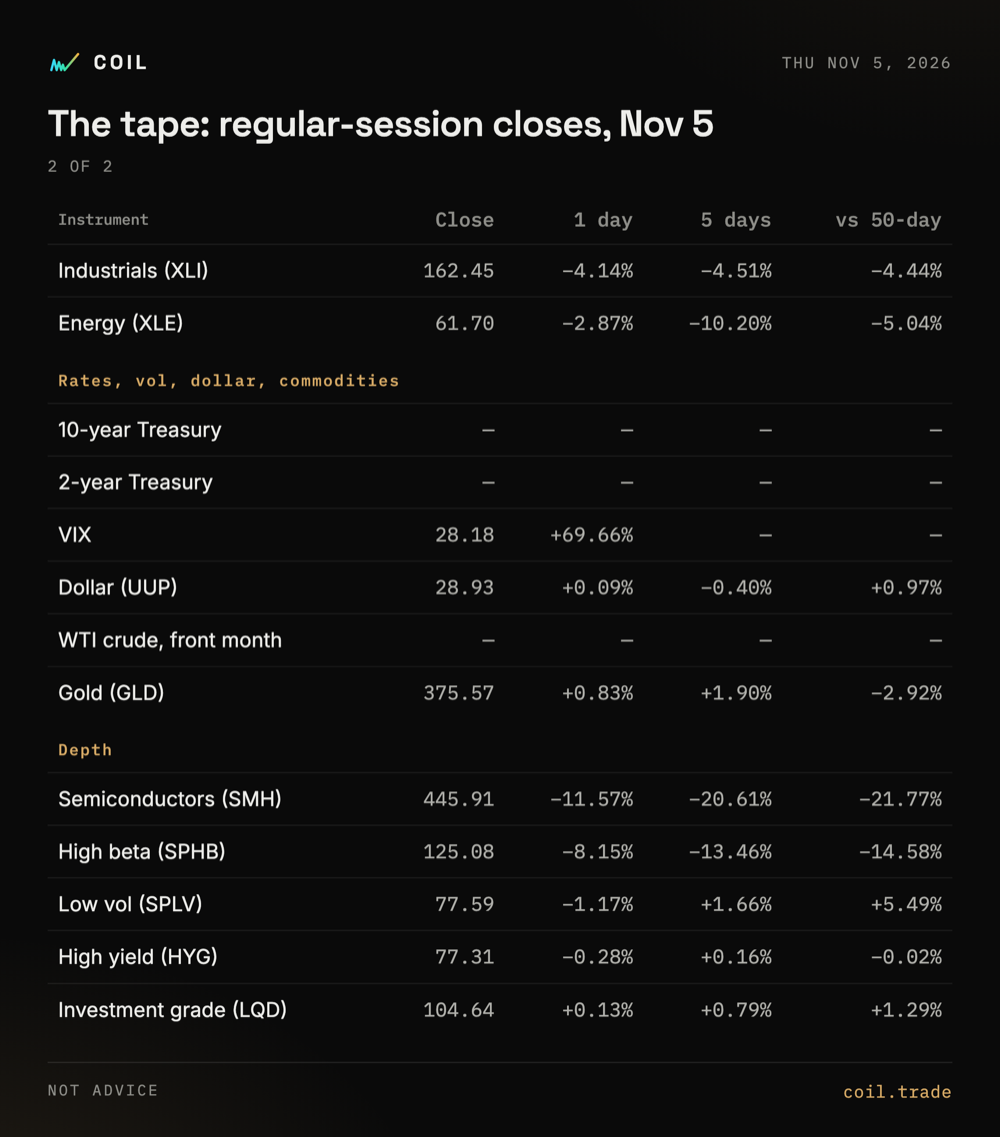
The 10-year, 2-year and WTI rows are blank: we could not retrieve a same-day level at this pull.
What changed since Wednesday's close
- The news on demand improved and the stocks fell anyway. Qualcomm and AppLovin both reported above estimates (table below), so we discount any argument that rests on this week's prints alone.
- The labor data gave no reason to sell. Initial claims were 189,000 for the week to Oct 31, down 6,000 from a revised 195,000, and announced job cuts were 43,994 for October, 71% below a year earlier. That puts more weight on Friday's payrolls, because Thursday's fall did not come from a weak print.
- Outside the US, the Bank of England raised its rate to 4% in an 8-1 vote, its first increase since 2023. That does not explain a day this concentrated, though it keeps borrowing costs in the argument for companies financing the AI build.
Where the selling was chosen, and where it looks forced
We split the 1,386 board names with closes back to January into five groups by their return this year through Wednesday. The top fifth, 277 names with a median gain of +60%, had a median move of −4.86% on Thursday, and 22 of them rose. Everything else, 1,109 names, had a median of −2.74%. That top fifth supplied 26 of the day's 50 biggest losers, where chance would put about 10.
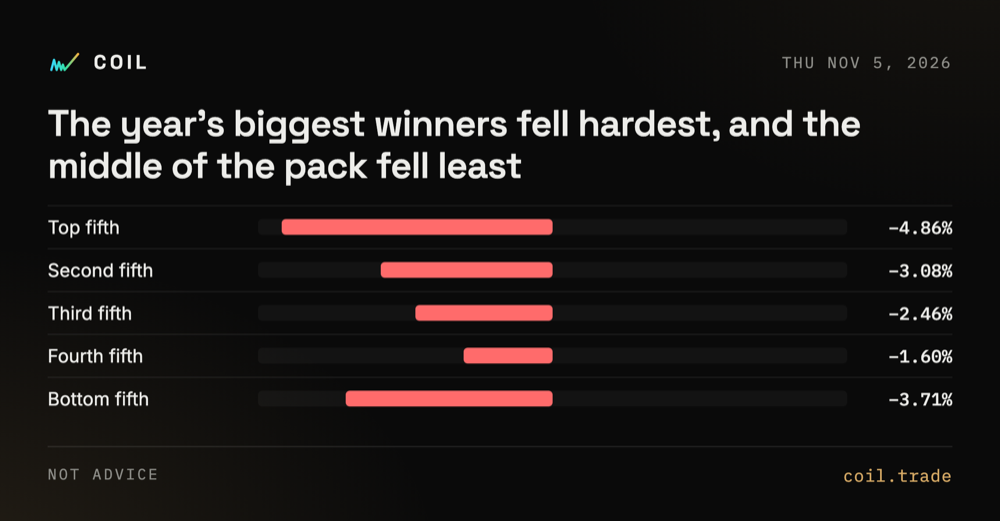
The bottom fifth, with a median loss of 25.3% on the year, fell hard too, so this was not a clean line from winners to losers. One strategist blamed hedge funds locking in 2026 gains and called it "shooting the generals," and one research firm said retail was on track for its largest net selling since March 2020. We have no flow data of our own and we can't confirm either. What we can test is what those accounts predict, and the sort supports them in part.
The sector detail is why we doubt the common read. A worry about data-center permits explains technology and the site builders from Wednesday. It does not explain the gap in health care below, and the coverage we read names no health care catalyst.
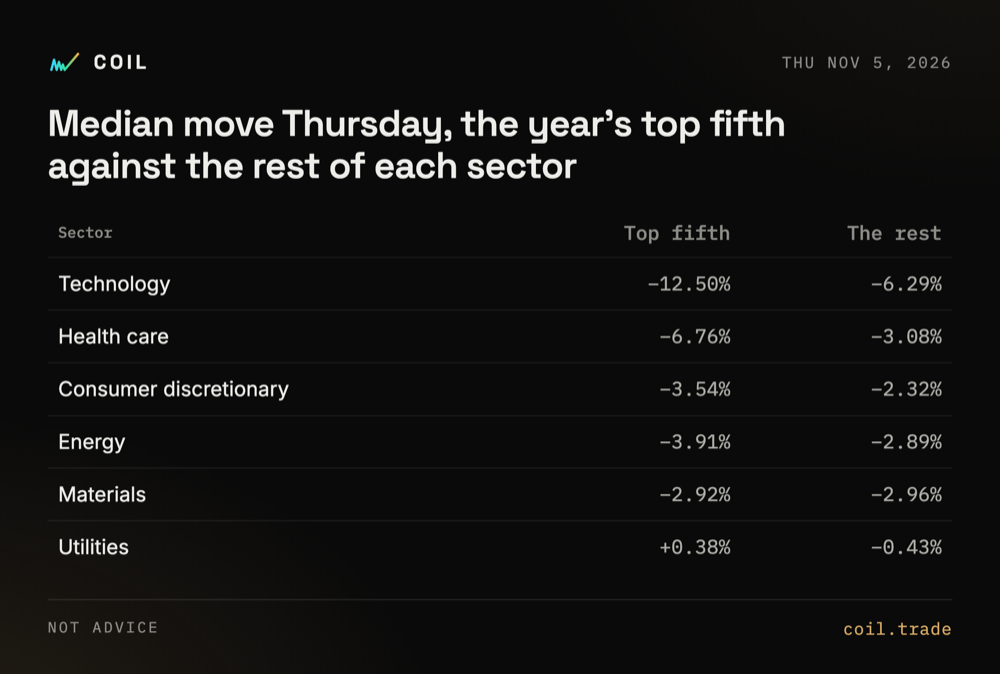
The pattern has limits, as materials and utilities show. It reprices anything crowded this year, and we would expect the same sort to show up in next week's reports: a good quarter from a big winner may buy little until this selling stops.
Timing inside the year mattered as well. We split the winners by what they did over the 60 sessions before Thursday.
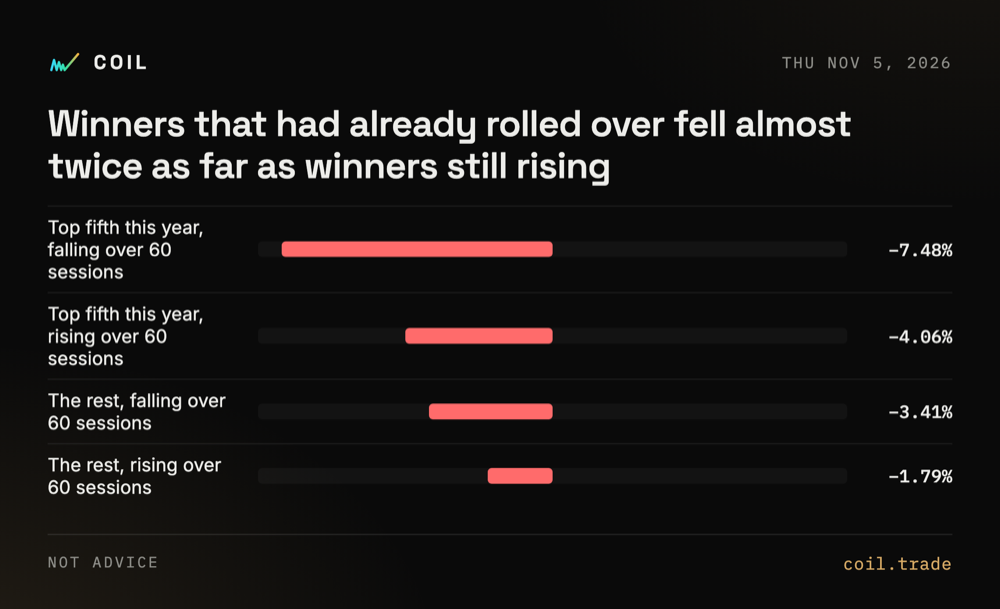
We read this as sellers choosing what to cut first: positions with large gains that had already begun to fail. Credit supports that reading. HYG closed −0.28% and LQD +0.13% while high beta (SPHB) lost −8.15%. A funding scare would usually show up in high yield, and on Thursday it showed up very little. Gold closed +0.83% and the dollar fund +0.09%, which fits the same quiet picture outside equities. The VIX closed at 28.18, +69.66% from Wednesday.
The forced part is harder to see from here. Research coverage described selling by systematic and leveraged strategies, and SMH's −20.61% over five sessions is the kind of move that would trigger it, though we have no positioning data to show it did. The equal-weight fund's −2.89% against −6.38% for QQQ says the typical stock was dragged along by much less than the headline.
The week's prints bought little, as SMH's move against options shows.
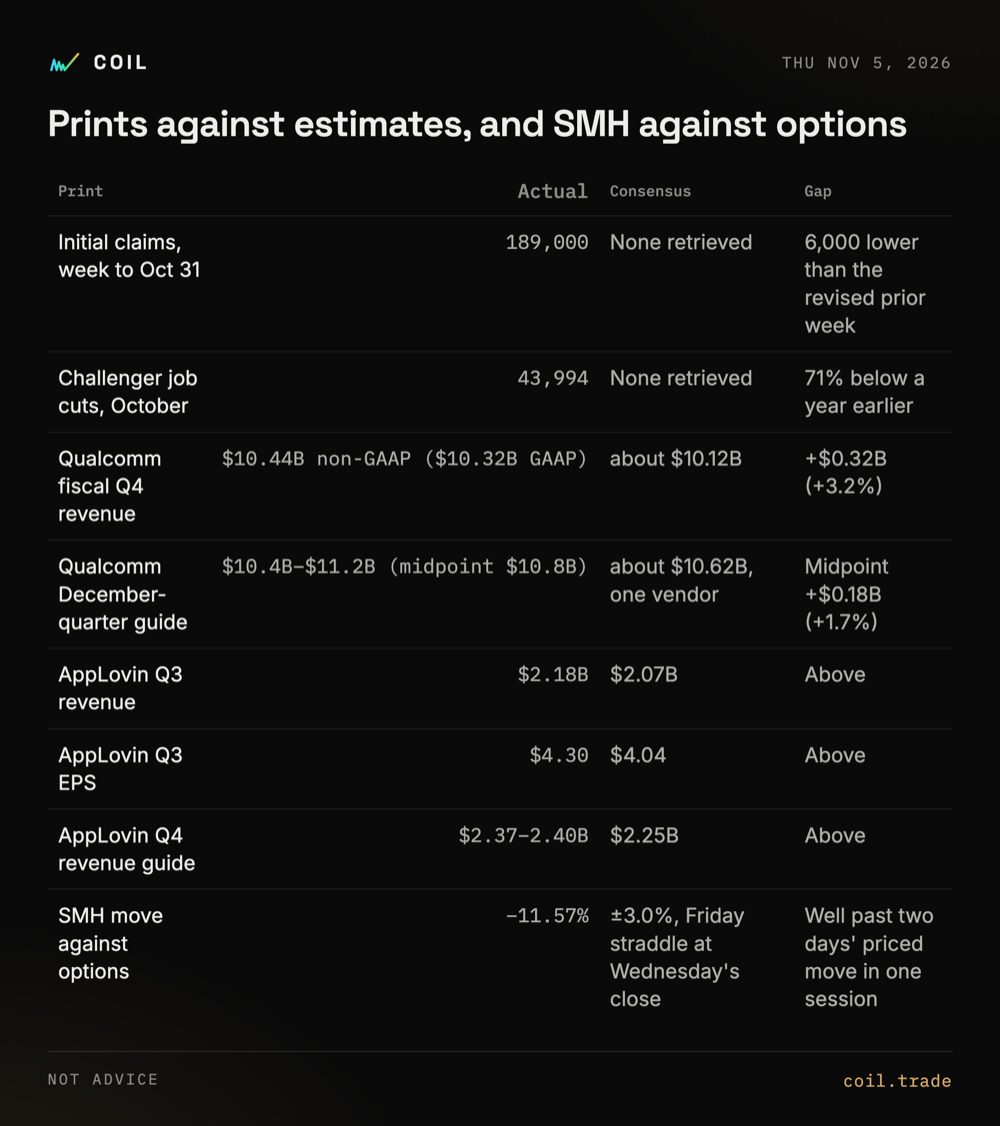
Estimates are public reports of data-vendor estimates and differ by vendor. Qualcomm's figures come from the release read for the Nov 4 Article.
We kept taking dips on a day that punished them
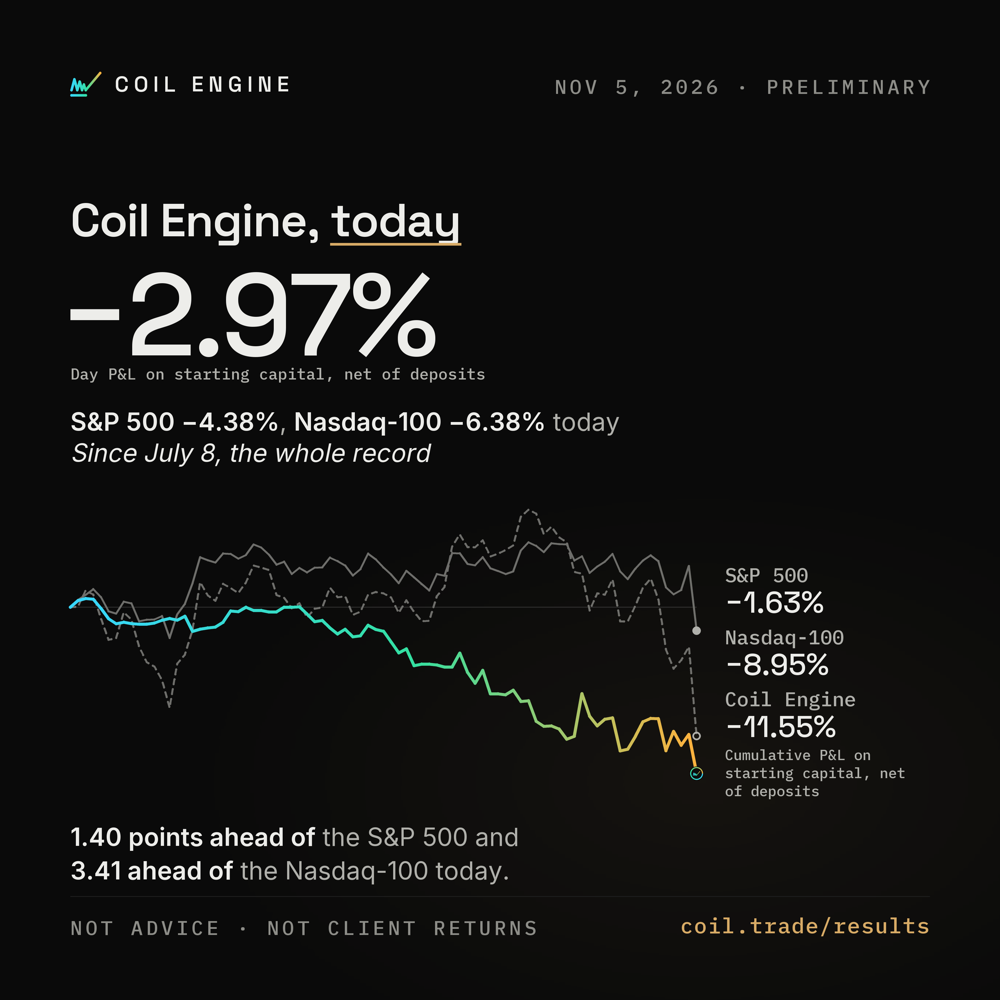
We opened 14 positions in the session's first three hours, and we sold 12 of them at a loss, none held longer than 90 minutes. Many were dip entries, recorded as weak daily charts showing an hourly turn. That read has no business running at full speed on a day the VIX jumps this much. The last batch included Snowflake and MongoDB, and our own record sold both quickly, citing technology's broken reading. Each loss was small and together they were the day's main mistake, because the morning's cash went to work against the argument at the top of this note.
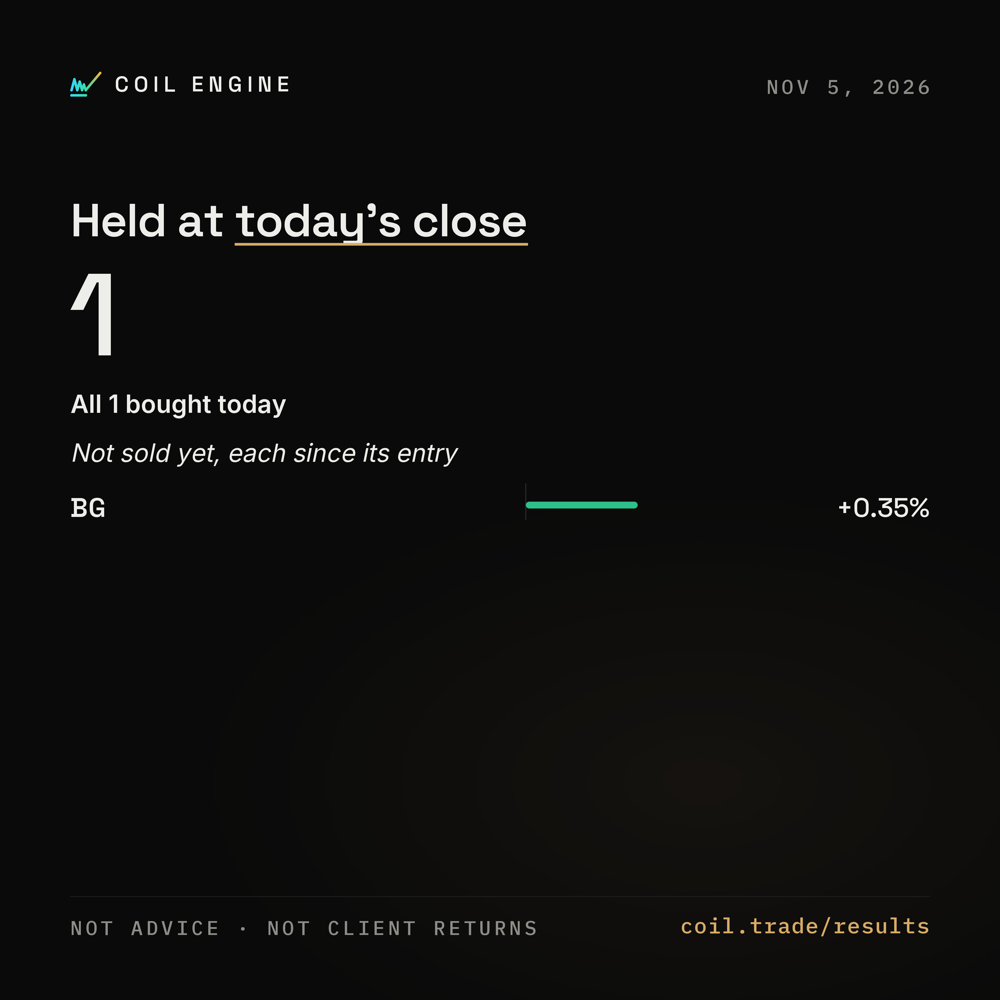
We also held SH, the inverse S&P 500 fund, early in the session. It closed 37 minutes later, up 0.72%, with SPY falling much further afterward. The rest of the selling did what it should. The record sold Robinhood, down 6.06% on the position, after it fell through its loss limit soon after the open. VeriSign went for a gain of +1.80% when the shock arrived. Before midday the record shows us out of energy, gold, silver and software, each on a broken group. The one name left is a dip in Bunge taken this morning, which closed +1.58% on the day.
We carry Bunge, and the rest is cash.
Both figures are the same 28.72 dollars: −2.29% on the account, −2.97% on the record's basis.

We keep our call on SMH through Friday
The common read is that the midterm result broke the AI trade and that the selling is a verdict on data-center spending. We agree permits are a real risk. We differ on how much of Thursday it explains, because the year's winners in other sectors fell the same way, the week's prints were fine, and credit barely moved. A large share of this looks like investors cutting gains, and selling of that kind can stop quickly once it is done.
We think SMH closes below its Tuesday close of 518.25 on Friday, November 6. The horizon is Friday's close, and the tell is SMH closing Friday at or above 518.25. The call stands, with SMH at 445.91 and 16.2% short of the line. We made it on margins, memory and funding. Most of this week's fall came from a reason we didn't have, so we take little credit whichever way Friday goes.
One way this fails is a violent bounce: a fund that moved −20.61% in five sessions can move a long way back, and if forced selling ended on Thursday, the rebound could be large. Reaching our line in one session means closing that whole gap, so we rate this as remote.
The second risk is to our reading, and it is the stronger one. Credit can move after equities, and one calm day in HYG says little. If high yield falls hard on Friday or next week, the funding worry is real and our positioning explanation is too generous. A soft payrolls number with yields falling would argue the other way and bring buyers back to the winners.
The book sits apart from the call: it holds no chips and no hedge, so it earns nothing from SMH falling further.
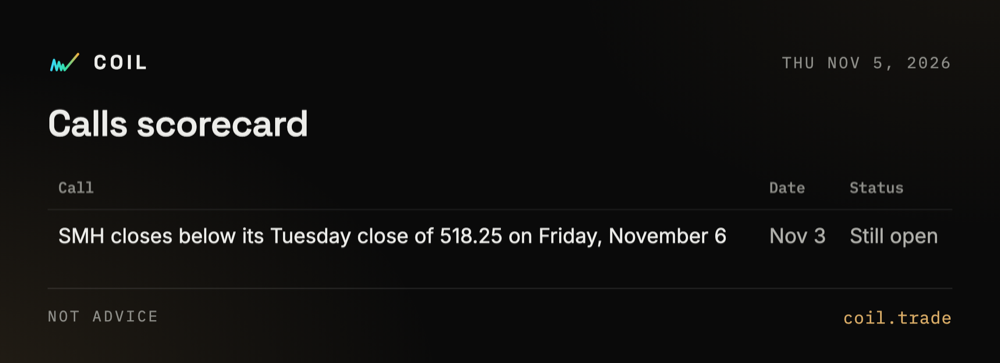
One call open, none graded.
What's next
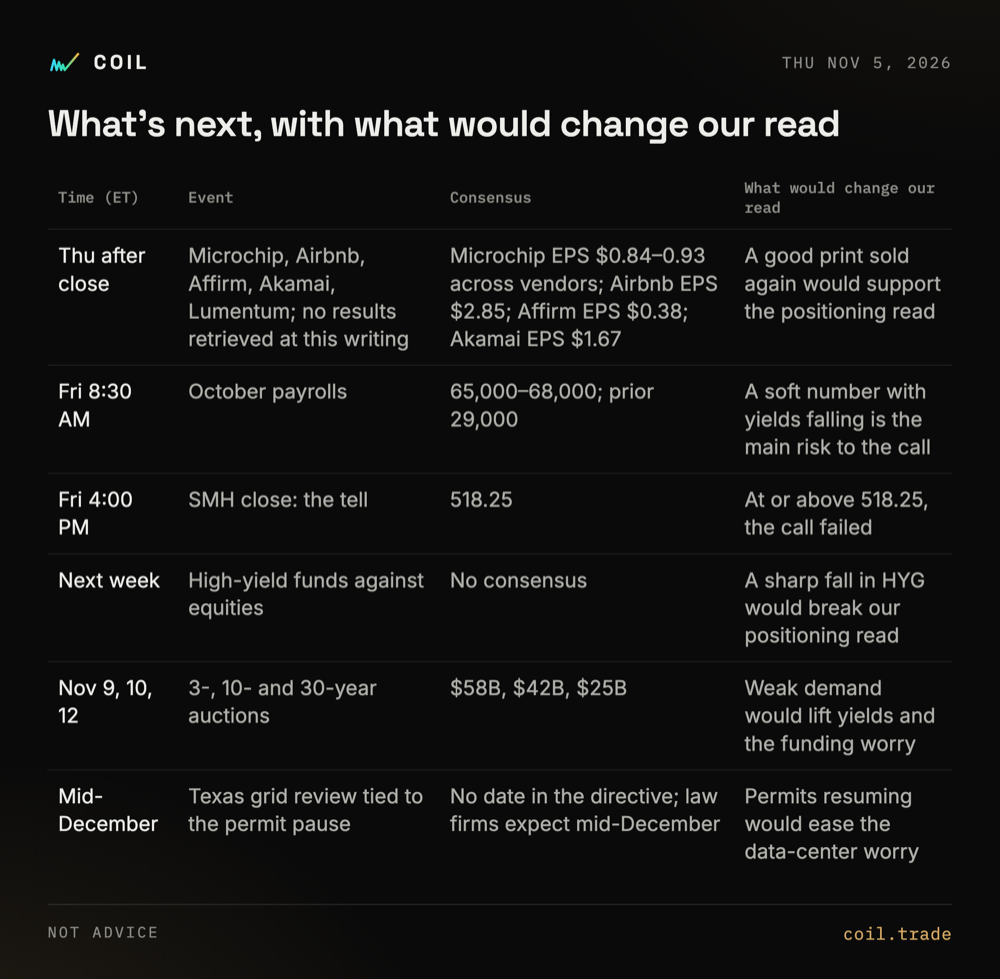
Our full record is at coil.trade/results.
Not advice.
COIL CLOSE is impersonal market commentary. It states a dated view of a market instrument, graded against its stated test, and is not investment advice, a recommendation or an instruction to trade, and is not tailored to anyone’s circumstances. Figures and prices are as of the time stated above.